
If you’ve been hurt in a car crash in St. Louis, Missouri law gives you five years from the date of the accident to file a personal injury lawsuit (RSMo § 516.120). Compensation depends on who caused the wreck, how badly you’re injured, and the insurance coverage available. Claimants with attorney representation receive settlements 3.5 times higher on average than those without lawyers (Insurance Research Council, 2024). Christopher R. Dixon, founder of The Dixon Injury Firm and a Super Lawyers honoree for 2024–2025, has recovered more than $60 million for clients across St. Louis, Clayton, Florissant, and St. Charles County.
The Dixon Injury Firm has secured over $60 million in recoveries for Missouri injury victims, including a $2 million commercial bus crash verdict right here in St. Louis. Born and raised in St. Louis, Christopher Dixon knows the local courts, the local roads, and what it takes to get real results against insurance companies. He’s a Lifetime Member of the Million Dollar Advocates Forum and was named to the National Trial Lawyers Top 100. Notable results include a $30 million sexual assault case, a $12 million wrongful death recovery, and a $2.75 million premises liability verdict. Call (314) 208-2808 for a free case review. You don’t pay unless we win.
On This Page:

A car accident claim in St. Louis City is handled differently than one filed in St. Charles County or St. Louis County. The judge assigned to your case, the local procedural rules, and even the jury pool tendencies can shift the value of your claim by tens of thousands of dollars. That’s not theory. That’s something you learn by showing up to the 22nd Judicial Circuit Court at the Civil Courts Building on Tucker Boulevard hundreds of times.
Christopher R. Dixon didn’t move to St. Louis to open a law practice. He grew up here. He knows that a crash at the I-64 and I-170 interchange during evening rush hour produces a different kind of case than a rear-end collision on Lindbergh Boulevard in Florissant. He knows which hospitals—like Barnes-Jewish Hospital and SSM Health Saint Louis University Hospital—produce the medical records that insurance adjusters actually respect. And he knows which adjusters try to lowball St. Louis victims because they assume nobody will push back.
This isn’t about putting a city name on a website. It’s about having the courthouse relationships, the local medical network, and the traffic pattern knowledge that turn a routine claim into a maximum recovery.
Over 282 Google reviews at a perfect 5-star rating tell the same story: clients in this community trust The Dixon Injury Firm because the firm is genuinely part of this community. Christopher co-founded The St. Louis Suit Project, a 501(c)(3) charitable organization. His roots here run deeper than his law degree.
If your crash happened anywhere in St. Louis, Clayton, Florissant, or St. Charles County, your case belongs with someone who already knows the terrain.
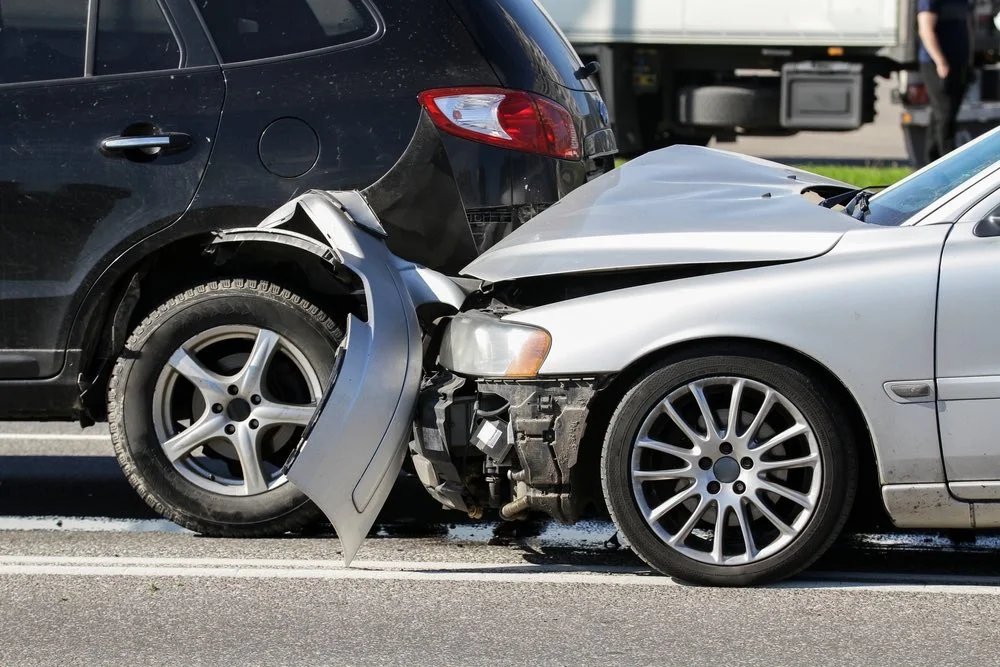
Most car accident lawyers follow a generic playbook: gather records, send a demand letter, take whatever the insurance company offers. The Dixon Injury Firm uses a different system. It’s called The Dixon Impact-to-Recovery Protocol, and it was built specifically to force higher settlements and stronger jury verdicts for Missouri crash victims.
Here’s how each phase works:
We don’t just look at the police report and the body shop estimate. We retain accident reconstructionists and biomechanical engineers who map the exact forces your body absorbed during impact. This converts physics into medical proof that State Farm, GEICO, or whoever the carrier is can’t wave away with a form letter denial.
A fender-bender at 15 mph generates very different spinal forces than a T-bone collision at 45 mph on Natural Bridge Avenue. Our experts quantify that difference and present it in language adjusters and juries both understand.
Drawing from $60 million in recoveries, we project your lifetime medical needs, lost earning capacity, and permanent disability costs using vocational economists and life care planners. Insurance companies use their own formulas to minimize these numbers. We counter with independent, defensible projections that reflect what your future actually costs.
The other driver isn’t always the only party at fault. We investigate vehicle manufacturers for defects, municipalities for road design failures, and employers for negligent hiring. A crash caused by a blown tire on I-70 might involve the tire manufacturer, the maintenance shop, and the trucking company that last serviced the vehicle. Identifying every responsible party expands the total pool of money available to you.
Before we ever file a lawsuit, we assemble trial-ready demand packages. These include collision data, medical causation reports, and our track record of results—like the $12 million wrongful death recovery and the $2.75 million premises liability verdict. Insurance adjusters recognize firms that actually go to trial. That recognition translates directly into higher pre-suit offers.
As a member of the National Trial Lawyers Top 100 and a Lifetime Member of the Million Dollar Advocates Forum, Christopher Dixon prepares every case as if it’s heading to a jury. We document scene evidence, secure expert testimony, and build the narrative before the first demand letter goes out. If the insurance company won’t pay what your case is worth, we’re already ready for the courtroom.
Not sure whether your case calls for this level of work? A free consultation answers that question. Call (314) 208-2808 and we’ll review the details.

There’s no single formula, but three factors drive every car accident case value: injury severity, liability clarity, and available insurance coverage. Here’s what typical ranges look like based on our experience handling cases across the St. Louis metro area.
Severity: Minor
Typical Settlement Range: $10,000 – $30,000
Key Factors: Treatment duration, pre-existing conditions
Severity: Moderate
Typical Settlement Range: $50,000 – $175,000
Key Factors: Surgical need, impact on daily activities
Severity: Moderate
Typical Settlement Range: $40,000 – $150,000
Key Factors: Fracture complexity, recovery time, hardware
Severity: Severe
Typical Settlement Range: $200,000 – $1,000,000+
Key Factors: Cognitive impairment, long-term care needs
Severity: Catastrophic
Typical Settlement Range: $500,000 – $5,000,000+
Key Factors: Paralysis level, life expectancy, lifetime care
Severity: Varies
Typical Settlement Range: $15,000 – $100,000+
Key Factors: Diagnosis, treatment history, daily function impact
The average auto liability claim for bodily injury nationally was $24,211 (Insurance Information Institute, 2023). But that average includes minor fender-benders where people never hire a lawyer. The cases we handle typically involve injuries serious enough that the stakes justify a thorough legal strategy.
Damages in a car accident case are the specific losses you can recover compensation for. Missouri law divides them into two broad categories: economic damages (medical bills, lost wages, property repair) and non-economic damages (pain and suffering, mental anguish, loss of enjoyment of life). If a loved one was killed, a separate wrongful death claim may be available to surviving family members.
What most people miss: future damages often exceed past damages. A herniated disc that requires spinal fusion doesn’t just cost $80,000 in surgical bills. It costs years of physical therapy, possible follow-up procedures, reduced earning capacity, and chronic pain that changes how you live. We build those future costs into every demand because insurance companies never volunteer them.
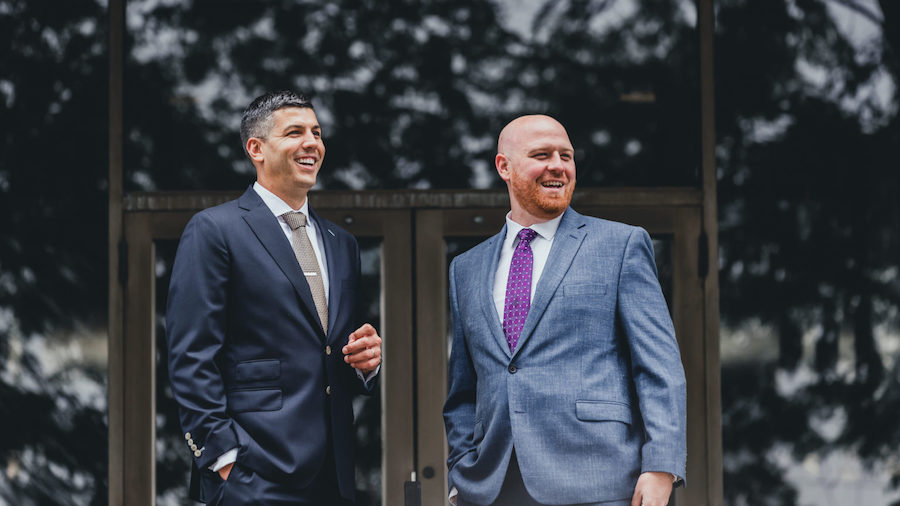
Chris Dixon & Greg Motil – St. Louis Car Accident Attorneys at The Dixon Injury Firm
Comparative fault is the legal principle that divides responsibility for an accident between the parties involved. Missouri follows a pure comparative fault rule (RSMo § 537.765), which means your compensation is reduced by your percentage of responsibility, but you can still recover even if you were mostly at fault.
Here’s how that works in practice. Say your case is worth $100,000, but a jury determines you were 30% responsible because you were slightly exceeding the speed limit. Your recovery drops to $70,000. Even at 70% fault, you’d still receive $30,000. Unlike Texas and many other states that bar recovery at 51% fault, Missouri lets injured people recover something as long as the other party shares any blame.
Insurance adjusters know this rule and use it aggressively. They’ll argue you were texting, speeding, or failed to brake in time. They’ll dig through your phone records and request surveillance footage to build a fault percentage that shrinks your payout. This is exactly why having a lawyer who understands comparative fault strategy matters from day one.
Missouri requires all drivers to carry minimum liability insurance of $25,000 per person and $50,000 per accident for bodily injury, plus $25,000 for property damage. But those minimums barely cover a trip to the emergency room at Barnes-Jewish Hospital, let alone surgery and months of rehab. Approximately 1 in 7 drivers on U.S. roads is uninsured (Insurance Research Council, 2023), and many more carry only the bare minimum.
Underinsured motorist (UIM) coverage is an optional addition to your own auto policy that pays the difference when the at-fault driver’s coverage can’t fully compensate you. If you carry UIM coverage, it can be the difference between a partial recovery and a full one.
Missouri Minimum: $25,000 / $50,000
What It Covers: Other driver’s injuries you cause
When It Applies: You’re at fault
Missouri Minimum: $25,000
What It Covers: Other driver’s vehicle/property damage
When It Applies: You’re at fault
Missouri Minimum: $25,000 / $50,000
What It Covers: Your injuries from uninsured driver
When It Applies: Other driver has no insurance
Missouri Minimum: Optional
What It Covers: Gap between their coverage and your damages
When It Applies: Their coverage is insufficient
Missouri Minimum: Optional
What It Covers: Your medical bills regardless of fault
When It Applies: Any accident
Source: mshp.dps.missouri.gov
An estimated 5.9 million police-reported motor vehicle crashes occurred in the U.S. in 2022 (NHTSA crash data). St. Louis contributes more than its share. The metro area’s aging highway infrastructure, heavy commuter volume, and construction zones create conditions where serious crashes happen daily.
The I-64/I-170 interchange in Brentwood is one of the most congested and crash-prone stretches in the region. Merge-related collisions happen there weekly during rush hour. The I-70 corridor through North St. Louis consistently ranks among the most dangerous urban interstates in Missouri, with speed differentials between passenger cars and semi-trucks creating rear-end and sideswipe crashes.
Kingshighway Boulevard and Chippewa Street, Gravois Avenue through South City, and the intersections along Natural Bridge Avenue in Northside all see high volumes of T-bone and left-turn crashes. These aren’t highways. They’re surface streets where pedestrians, cyclists, and drivers mix at speeds that leave very little margin for error. If your crash involved a pedestrian, a pedestrian accident claim follows a somewhat different legal path.
Key insight: In our experience, crashes on Missouri Department of Transportation construction zones along I-44 and I-55 produce some of the most complex liability questions. Multiple contractors, shifting lane configurations, and inconsistent signage can spread fault across the driver, the construction company, and MoDOT itself. These cases require investigation that goes well beyond a police report.
Motorcycle riders face particular danger on Highway 100 west through St. Charles County, where winding roads, limited shoulders, and tourist traffic create blind-spot collisions every riding season. If you were on a bike, a motorcycle accident attorney understands the specific biases riders face with insurance companies and juries.
Rear-end crashes accounted for approximately 29% of all crashes nationally (NHTSA, 2022), and they’re the most common type we see in St. Louis. But the injuries from even a “simple” rear-end collision can be anything but minor.
Whiplash and soft tissue injuries are the most frequently diagnosed. They’re also the most frequently undervalued by insurance companies because they don’t show up on X-rays. MRI imaging, consistent treatment records, and a doctor who understands crash mechanics make the difference between a $5,000 lowball offer and a fair settlement.
Herniated and bulging discs often don’t produce symptoms for days or even weeks after a crash. This delay is one reason insurance companies argue the injury was pre-existing. We counter this with biomechanical analysis that connects the specific crash forces to the specific spinal injury.
Traumatic brain injury (TBI) is a disruption of normal brain function caused by a blow, jolt, or penetrating injury to the head. TBIs range from mild concussions to severe injuries causing permanent cognitive impairment. According to CDC transportation safety data, motor vehicle crashes are a leading cause of TBI-related hospitalizations. Even a “mild” concussion can cause headaches, memory problems, and emotional changes lasting months or longer.
Broken bones, internal organ damage, and lacerations are common in higher-speed collisions on highways like I-64 and I-270. These injuries typically require emergency treatment at Level I trauma centers like Barnes-Jewish Hospital, followed by surgery, hardware implantation, and extended rehabilitation.
And then there’s the injury nobody sees. Post-traumatic stress disorder (PTSD), driving anxiety, and depression affect a significant number of crash survivors. Missouri courts recognize these psychological injuries as compensable damages. You don’t have to prove you lost a limb to prove the crash changed your life.
If your accident was caused by a commercial vehicle or semi-truck, the injuries tend to be more severe due to the massive weight differential. A truck accident claim involves additional federal regulations and multiple potentially liable parties.

Here’s something most people don’t realize until it’s too late: the insurance adjuster who calls you after a crash isn’t trying to help you. They’re trying to close your file for the lowest possible number. That’s their job. They’re trained in it. And they’re good at it.
The most common tactic is the quick, low offer. Within days of the accident, an adjuster calls with a check for $3,000 or $5,000. It sounds generous when your bills are piling up. But accepting it means signing a release that kills your right to seek further compensation, even if you need surgery six months later.
Other tactics we see regularly:
In our experience, the initial insurance offer averages 30-40% of the case’s actual value. That gap is where a car accident attorney earns their fee many times over.
Evidence fades quickly too. Skid marks on pavement wash away. Traffic camera footage gets overwritten within 30 to 90 days. Witnesses forget details. The longer you wait to get a lawyer involved, the harder it becomes to build a strong case. If you’re fielding calls from an adjuster right now, a quick conversation with our team can tell you whether their offer is fair. Call (314) 208-2808.

Most car accident cases settle without a trial. But the ability and willingness to try a case is what creates settlement pressure. Insurance companies track which firms actually file lawsuits and which ones always settle. The Dixon Injury Firm has a track record that puts us in the first category.
Car accident lawsuits in St. Louis City are filed in the 22nd Judicial Circuit Court at the Civil Courts Building on Tucker Boulevard downtown. Cases in St. Louis County go through the 21st Judicial Circuit in Clayton. St. Charles County cases are handled by the 11th Judicial Circuit. Each court has its own procedural tempo, its own judges, and its own jury pool demographics.
Discovery is the pre-trial phase where both sides exchange evidence, take depositions, and identify expert witnesses. In Missouri, discovery in a car accident case typically takes 6 to 12 months, depending on complexity and the court’s calendar.
Here’s what a typical case timeline looks like:
Typical Duration: 1 – 12 months
What Happens: Complete all recommended treatment
What You Should Do: Follow your doctor’s plan consistently
Typical Duration: 1 – 3 months
What Happens: Collect evidence, calculate damages, send demand
What You Should Do: Provide records promptly, avoid social media posts
Typical Duration: 1 – 3 months
What Happens: Back-and-forth with insurer
What You Should Do: Review offers carefully with your attorney
Typical Duration: 6 – 18 months
What Happens: File lawsuit, discovery, motions, trial prep
What You Should Do: Attend depositions and court dates as scheduled
Typical Duration: 3 – 7 days
What Happens: Jury selection, testimony, verdict
What You Should Do: Trust your legal team’s preparation
Most of our car accident cases resolve in 6 to 14 months. Complex cases involving surgery, disputed liability, or multiple defendants can take 18 to 24 months. The timeline is the timeline whether you have a lawyer or not. The difference is what you receive at the end.

Yes. Missouri’s pure comparative fault rule (RSMo § 537.765) means you can recover compensation even if you were significantly at fault. There is no percentage threshold that bars your claim in Missouri. If you were 80% responsible and the other driver was 20% responsible, you still recover 20% of your damages.
This is more generous than most states. Texas, for example, bars recovery entirely at 51% fault. Illinois uses a similar threshold. Missouri’s approach means even contested liability cases are worth pursuing.
But here’s the catch: insurance companies in Missouri know this rule and aggressively argue for higher fault percentages against injured claimants. They’ll use dashcam footage, phone records, toxicology reports, and witness statements to build the biggest number they can pin on you. Every percentage point they assign to you comes directly out of your recovery.
That’s why our Collision Biomechanics Analysis—the first phase of The Dixon Impact-to-Recovery Protocol—is so valuable in disputed-fault cases. When we can prove through engineering data exactly how the crash happened, the fault allocation arguments shift in our favor.

40,990 people died in motor vehicle crashes across the United States in 2023 (NHTSA). Missouri’s numbers reflect a troubling trend: distracted driving, impaired driving, and higher vehicle speeds continue to push crash severity upward even as vehicle safety technology improves.
Distracted driving claimed 3,308 lives nationally in 2022 (NHTSA, 2022). In St. Louis, we’ve seen a sharp increase in crashes where the at-fault driver was using a phone at the time of impact. Missouri’s texting-while-driving ban applies only to drivers under 21, making it one of the weakest distracted driving laws in the country. That means proving distraction often requires subpoenaing phone records rather than relying on a citation.
13,524 people died in alcohol-impaired driving crashes in 2022, accounting for 32% of all traffic fatalities (NHTSA, 2022). The stretch of I-70 between downtown St. Louis and the casinos in St. Charles County sees a disproportionate share of impaired driving crashes, particularly on weekend nights.
Looking ahead, two trends are reshaping St. Louis car accident litigation:
We’re selective about the cases we take. That’s not a limitation—it’s a promise. Every client we represent gets the full attention of our team, not a file number in a stack of hundreds. Here’s exactly what that means:
Commitment 1: You’ll hear from us within 24 hours of your first call. We answer our phones 24/7, including weekends and holidays. Your first conversation is with someone who can actually evaluate your case, not a call center. Christopher Dixon personally reviews every new matter.
Commitment 2: You’ll always know where your case stands. We provide regular updates and explain every development in plain language. If the insurance company makes an offer, we don’t just tell you the number. We explain why it’s fair or why it isn’t, and what we recommend as the next step.
Commitment 3: You’ll never pay a fee unless we recover money for you. We work on a contingency fee basis. That means zero upfront costs, zero hourly bills, and zero risk. We front the investigation costs, the expert witness fees, and the court costs. If we don’t win, you owe us nothing.
These aren’t marketing lines. They’re the reason 282 families across St. Louis have left us five-star reviews on Google. We don’t take every case that walks through the door. But the cases we do take get everything we’ve got.
 Results speak. Here’s a snapshot of notable recoveries The Dixon Injury Firm has achieved for clients:
Recovery Amount: $30,000,000
Key Details: Largest single recovery in firm history
Recovery Amount: $12,000,000
Key Details: Wrongful death claim
Recovery Amount: $2,750,000
Key Details: Property owner negligence
Recovery Amount: $2,000,000
Key Details: Commercial vehicle collision in St. Louis
Recovery Amount: $60,000,000+
Key Details: Across all personal injury case types
$60 million recovered isn’t just a number. It represents real families in St. Louis who got the medical treatment they needed, replaced the income they lost, and held negligent parties accountable. Your case could be next.
 Use this checklist in the days following your crash:
Think it might be too late to start your case? It probably isn’t. Missouri’s five-year statute of limitations gives you time, but evidence doesn’t wait. A quick call can tell you exactly where you stand. Call (314) 208-2808.
The information on this page is for general informational purposes and does not constitute legal advice. Every case is unique, and past results do not guarantee future outcomes. Contact a qualified attorney to discuss your specific situation.
You’ve read the details. You understand your rights. Now it’s time to protect them. Missouri’s five-year filing deadline might seem distant, but witness memories fade, evidence disappears, and insurance companies count on delay working in their favor. The Dixon Injury Firm is available 24/7, the consultation is free, and you pay nothing unless we recover money for you. Call Christopher Dixon’s team at (314) 208-2808 today.
The Dixon Injury Firm works on a contingency fee basis, which means you pay absolutely nothing upfront. We cover all investigation, expert, and court costs. Our fee comes as a percentage of your recovery, and only if we win. If we don’t recover money for you, you owe us zero.
Missouri’s statute of limitations for personal injury claims is five years from the date of the accident (RSMo § 516.120). However, waiting too long weakens your case because evidence degrades and witnesses forget details. We recommend consulting an attorney as soon as possible after the crash.
Case value depends on injury severity, liability clarity, and available insurance coverage. Minor soft tissue injuries typically settle between $10,000 and $30,000, while severe injuries like TBI or spinal cord damage can exceed $1 million. We evaluate your specific damages during a free consultation.
Almost never. In our experience, initial offers average 30-40% of the case’s actual value. Insurance companies make early offers because they know the claim is worth more. Before accepting anything, have a lawyer review the offer. We do this for free.
Missouri uses pure comparative fault (RSMo § 537.765), which means you can recover compensation even if you were mostly at fault. Your award is reduced by your percentage of responsibility, but there’s no threshold that bars your claim entirely. A 70% at-fault driver still recovers 30% of their damages.
Most cases settle in 6 to 14 months. Complex cases involving surgery, disputed liability, or multiple defendants can take 18 to 24 months. The timeline depends on your medical treatment duration and how aggressively the insurance company negotiates.
You’re not required to hire one, but the data is clear. Claimants with attorney representation receive settlements 3.5 times higher on average than those without lawyers (Insurance Research Council, 2024). For anything beyond a minor fender-bender with no injuries, legal representation typically pays for itself many times over.
Approximately 1 in 7 drivers on U.S. roads is uninsured (Insurance Research Council, 2023). If the at-fault driver has no insurance, you may still recover through your own uninsured motorist (UM) coverage or by filing a lawsuit directly against the driver. We review all available coverage sources during your free consultation.
The majority of car accident cases settle before trial. But settlement leverage comes from being genuinely prepared to try the case. As a Top 100 Trial Lawyer recognized by the National Trial Lawyers Association, Christopher Dixon prepares every case with trial in mind. Insurance companies know which firms actually go to court.
Several options exist. Your own health insurance or MedPay coverage can cover treatment costs during the case. Some medical providers accept liens, meaning they agree to be paid from your settlement. We help clients identify the best payment arrangement so treatment isn’t delayed by financial concerns.
Politely decline until you’ve spoken with an attorney. Recorded statements are used to find inconsistencies and reduce your claim. What feels like a casual conversation is actually an evidence-gathering tool. We coach every client on exactly what to say and what to avoid before any adjuster contact.
Yes. Missouri’s five-year statute of limitations means you likely still have time. That said, evidence weakens over time. Traffic camera footage is overwritten, skid marks fade, and witnesses become harder to locate. The sooner you start, the stronger your case will be.

